Table of Contents
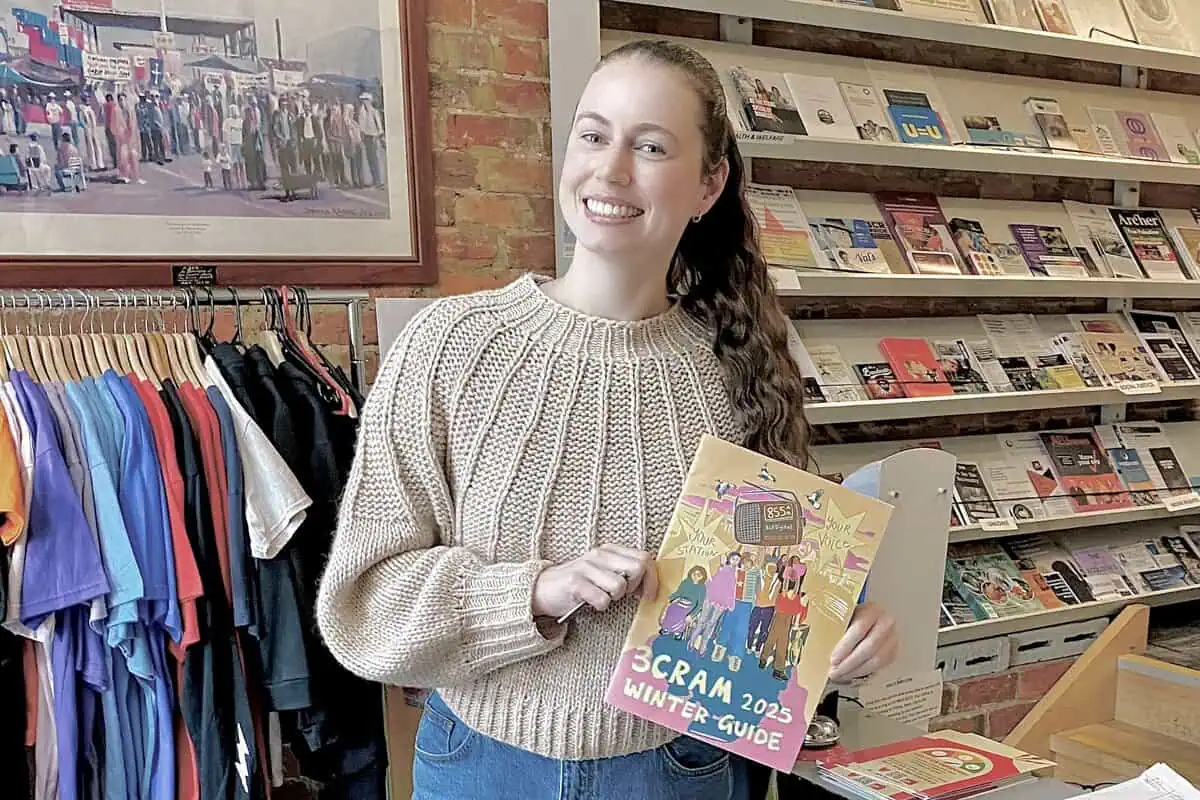
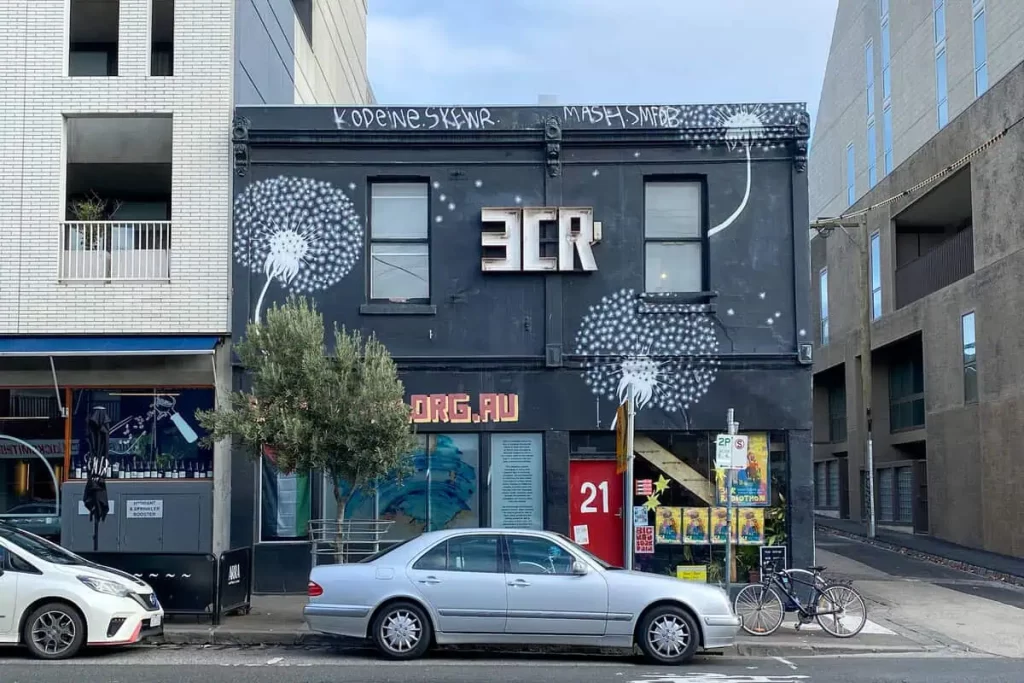
In June 2025, I had the opportunity to be featured in an author radio interview on 3CR Community Radio’s Published…Or Not program. Hosted by the thoughtful and enthusiastic Lisa Moule, we talked about my debut middle-grade fantasy novel, The Potion Experiment, and the journey of bringing science and magic together in a story for young readers.
My interview was conducted alongside David McLean discussing Thomas Vowles’ psychological thriller Our New Gods. You can listen to the full author radio interview or read more about the episode on 3CR’s website. I’ve also included a transcript of my interview and YouTube audio at the end of this post.
Blending science and magic for curious readers
We kicked off the author radio interview by discussing how The Potion Experiment blends STEM concepts with fantasy. I believe that science can be just as magical as spells – when it’s presented with imagination. In the book, Ange, a young scientist, swaps bodies with Eva, a girl from a magical realm. What follows is a story full of discovery, contrast and ultimately connection.
“I was never super interested in science, but I remember reading fantasy novels and getting carried away into other worlds—and you learn so much about those worlds. I thought, why can’t science concepts be taught the same way—where you want to engage with it, you want to learn more because it helps you understand the story?”
Creating a believable bridge between these two worlds meant exploring real-world science (like electromagnetic waves) and finding magical parallels. It was part research, part creativity and all fun.
Writing body-swaps and time-jumps
Lisa asked how I managed the tricky logistics of body-swapping, time jumps and dual perspectives. I admitted that my first drafts were chaotic – but that the puzzle-like challenge was part of the appeal. With help from my editor, I shaped the structure into something that feels organic and seamless for readers.
“My first draft, I was just kind of going with it, seeing what came out. But after talking to my editor—many drafts down the line—there were a lot of time jump inconsistencies. So it wasn’t just the body swapping and the mind reading I had to fit into the writing; I also had to fit in the different timing of events.”
From architecture to story structure
One of the most rewarding parts of the author radio interview was talking about how my background in architecture helped shape my writing. Both disciplines require thinking about relationships – not just between characters, but between elements of a world.
“You don’t just think of one aspect—you think of characters in relation to something else. Architecture is very similar in that way. So in terms of training my mind to think like a writer, I think studying architecture really helped.”
That mindset helped me craft intricate magical systems with rules and structure, as well as detailed settings. The story is unapologetically Australian in setting. From eucalyptus trees to native flowers like wattles and billy buttons, I wanted to root the magic in something familiar to Australian readers.
Character growth and navigating differences
The Potion Experiment is also about emotional growth. There are no villains, just characters navigating differences and learning empathy. By the end, Ange and Eva understand each other – and themselves – a little more.
“I didn’t want there to be an evil antagonist in the story. There are disagreements and disputes, but it always comes from the perspective of: just because people are different doesn’t mean they can’t find similarities or get along. So the two protagonists are quite different—but by the end, they’re friends.”
Writing for young readers with STEM in mind
Another highlight of the author radio interview was discussing how the book can gently introduce STEM ideas. Eva’s unfamiliarity with our scientific world creates funny, relatable moments, but also opportunities for curiosity and learning.
“On one hand, I wanted to create funny situations where readers might say, ‘Oh, as if she doesn’t know that—how funny.’ And other times, ‘Oh, that’s actually interesting. I didn’t know that.'”
Self-publishing and creative control
We wrapped up the author radio interview with a conversation about self-publishing. I talked about the decision to go indie, the creative control it gave me and the lessons I learned along the way.
“I really enjoyed doing the typesetting and working with the cover artist … you’ve got to research what’s involved and figure out if it’s worth it to you or not quite.”
A thoughtful conversation
I’m so grateful to Lisa and the 3CR team for such a thoughtful conversation and for spotlighting The Potion Experiment. If you’re curious about middle-grade fantasy, STEM storytelling or the self-publishing process, I think you’ll enjoy this author radio interview.
Read the full transcription
Lisa: So today I have with me Elle McFadzean. She is an architecture graduate as well as a writer, and her debut novel is The Potion Experiment. Welcome, Elle.
Elle: Hello. Thank you for having me.
Lisa: You are so welcome. The Potion Experiment is a middle grade fantasy adventure that explores themes of friendship, self-discovery, and the surprising similarities between magic and science.
Elle: Yes.
Lisa: What inspired you to merge magic with science in a novel for children?
Elle: I wanted science to be seen as something a lot more exciting. I was never super interested in science, but I remember reading fantasy novels and getting carried away into other worlds—and you learn so much about those worlds. I thought, why can’t science concepts be taught the same way—where you want to engage with it, you want to learn more because it helps you understand the story?
Lisa: Awesome. Let’s explore the premise a little bit. So, 13-year-old scientist Ange believes she’s cracked teleportation when she’s unexpectedly transported to a magical forest. However, she soon discovers she’s swapped bodies with Eva, a girl from a world where magic is real and science is unknown. Let’s talk about the body swap dynamics between Ange and Eva. It’s a really unique situation. Can you explain that for us? How hard was it to navigate as a writer—the rules and so on?
Elle: Pretty tricky. My first draft, I was just kind of going with it, seeing what came out. But after talking to my editor—many drafts down the line—there were a lot of time jump inconsistencies. So it wasn’t just the body swapping and the mind reading I had to fit into the writing; I also had to fit in the different timing of events. If one character is really busy, I can’t have them having a conversation with the other unless the other is free. So figuring out all the mechanics was difficult—but also very enjoyable.
Lisa: Yeah, absolutely.
Elle: A bit of a puzzle.
Lisa: Yeah, for sure. I’m just thinking—because you have an architecture background—I’m wondering how that played into your worldbuilding as an author. Did that have an impact? You’re talking about structure and finding rules that were confusing to navigate a little bit. Do those cross over?
Elle: I definitely think they do—architecture and literature. I think there are a lot of similarities in the way you’re taught to think about them. You don’t just think of one aspect—you think of characters in relation to something else. Architecture is very similar in that way. So in terms of training my mind to think like a writer, I think studying architecture really helped.
Lisa: That’s fascinating, actually. Really interesting. I’d love to explore the character a little—maybe just get a taste of Ange in a second—but first, what challenges did you face in creating a believable crossover between the scientific and magical worlds? Was that hard to mesh or to fuse?
Elle: It was. There were bits and pieces. I came up with a list of all the similarities I could find, and there are a lot of precedents for magical worlds and tropes—what people expect to get from a magical world. I started with that, and then I was reading a lot of science fact books and just hoping for inspiration to hit. It came to me strongest with electromagnetic waves—comparing them to magic currents in the magical universe. From that point, I ran with it, and found a lot more similarities I could pull from that concept.
That was quite enjoyable to play around with. There were some other ideas I thought of that didn’t quite work out. For example, I was going to have her doing a DNA test at one point, but then I figured—well, she’s in the magic world. She doesn’t have any equipment. So there were limitations like that.
Lisa: Yeah. I love that notion of electromagnetic waves being somehow very similar to magic, or working in the same way. That’s inspired. Would you mind reading a little bit of your character and chapter? It’s page 12, isn’t it? What chapter is it?
Elle: Yes. So it’s chapter two, which I mentioned to you is actually the first chapter I wrote.
Lisa: Wow.
Elle: So this is really interesting that you picked it out because it’s the one that set up the world and the characters.
Lisa: Awesome. I’m glad I chose that, then.
Elle: “I knew the exact number of protons and neutrons in every element of the periodic table. I could code a computer program to mimic the human brain. I even had a theoretical understanding of dark matter detection and cosmological evolution. But I had no idea how I’d ended up wherever this was. I didn’t have enough facts to even make a calculated guess.
“Teleportation was my first thought—the breaking up of atoms in one location and reassembling them in a different location—but that hadn’t been invented yet. It was only theory. How could someone suddenly appear in a completely different place?
“How could I have gone from standing in my home about to head to school, to standing in a forest clearing surrounded by eucalyptus trees and wattles?
“The trees swayed in the wind, and the heavy swishing of rustling leaves surrounded me. Birds flitted between branches and soft morning sunlight streamed down upon me.
“Coloured native flowers sprouted in the long grass: bright pink blooming bottlebrush, bundles of yellow billy buttons, soft blue lace flowers, and delicate white daisies—flowers I’d seen every day in my garden and at school.
This calmed me, if only slightly.”
Lisa: Thank you. Some beautiful description of setting—and very Australian, as well.
Elle: Very Australian, yes.
Lisa: Was that a conscious thing? Did you want to make it particularly Australian?
Elle: Yes. I’ve read a lot of fantasy novels set in high fantasy worlds that are completely different to ours, and a lot of urban fantasy that’s often set in the US. I wanted to write one that was very Australian.
Lisa: Yeah. Well, the feel really comes across. I also enjoyed the relationships in this book—including the parents. The novel delves into themes of friendship and self-discovery. How did you approach character development to ensure those themes resonated with younger readers?
Elle: One thing I love so much about middle grade and young adult books is that there’s so much room for character development. They’re discovering who they are—there are so many questions they’re asking about life, themselves, the world, and those around them.
By having two characters who were essentially the same person from different worlds, there was a lot to work with in terms of their differences and similarities.
I didn’t want there to be an evil antagonist in the story. There are disagreements and disputes, but it always comes from the perspective of: just because people are different doesn’t mean they can’t find similarities or get along. So the two protagonists are quite different—but by the end, they’re friends.
Lisa: Hmm. You’re normalising a discussion rather than demonising a good or bad person, which sounds very sensible and appropriate.
Elle: There’s a lot of nuance. It’s not black and white. There’s always room to learn.
Lisa: There’s also—because the character Eva is coming from a place of ignorance and delving into our world—we explore our scientific world from a point of unfamiliarity. Was that a device you consciously used to introduce children to STEM or science?
Elle: Yes. And there were a lot of fun opportunities to play around with that. On one hand, I wanted to create funny situations where readers might say, “Oh, as if she doesn’t know that—how funny.” And other times, “Oh, that’s actually interesting. I didn’t know that.”
Lisa: Yeah, absolutely. Lots of opportunities for you to include scientific components for children in there as well. So The Potion Experiment is your debut. Have you got plans for a sequel, or other projects that continue exploring this fantasy–science world?
Elle: I left the ending a bit open in case I did want to write a sequel. The more I think about it, the more I’m leaning towards it—so possibly. It’s not a locked-down ending, so we’ll see.
Lisa: Awesome. And something else I’d like to touch on—the novel is self-published. What advice would you give to aspiring writers, especially those interested in self-publishing? Would you offer some drops of wisdom, perhaps?
Elle: I mean, I’m still learning as I go—there’s always more to learn about what’s out there. But there is a lot online. So I’d say: do your research first and think about what will work for you. It’s a lot of work—but maybe you like doing that work.
I come from an architecture background, and I really enjoyed doing the typesetting and working with the cover artist. That was something really enjoyable for me. So you’ve got to research what’s involved and figure out if it’s worth it to you or not quite.
Lisa: Mm, okay. And some of the advantages, I guess, are that you have complete creative control over every aspect—though that can also be a lot to carry.
Elle: Yes, if you’re not up for it. One thing I struggled with was actually just putting it down and stopping my edits. I could have edited until—
Lisa: —the cows come home?
Elle: Until the cows come home. So I had to just put it down.
Lisa: Okay. Yeah, I mean, that sounds hard. That’s probably why an editor is so useful—because eventually they just say, “That’s enough now.”
Elle: Yeah. “I’m taking the book off you.”
Lisa: Yeah. Well, it was such a wonderful read. I really enjoyed the blend of science, whimsy, and fun, and the delightful character relationships. Thank you so much for The Potion Experiment, Elle.
Elle: Thank you. And thank you for having me.
Lisa: You are welcome.
