Table of Contents
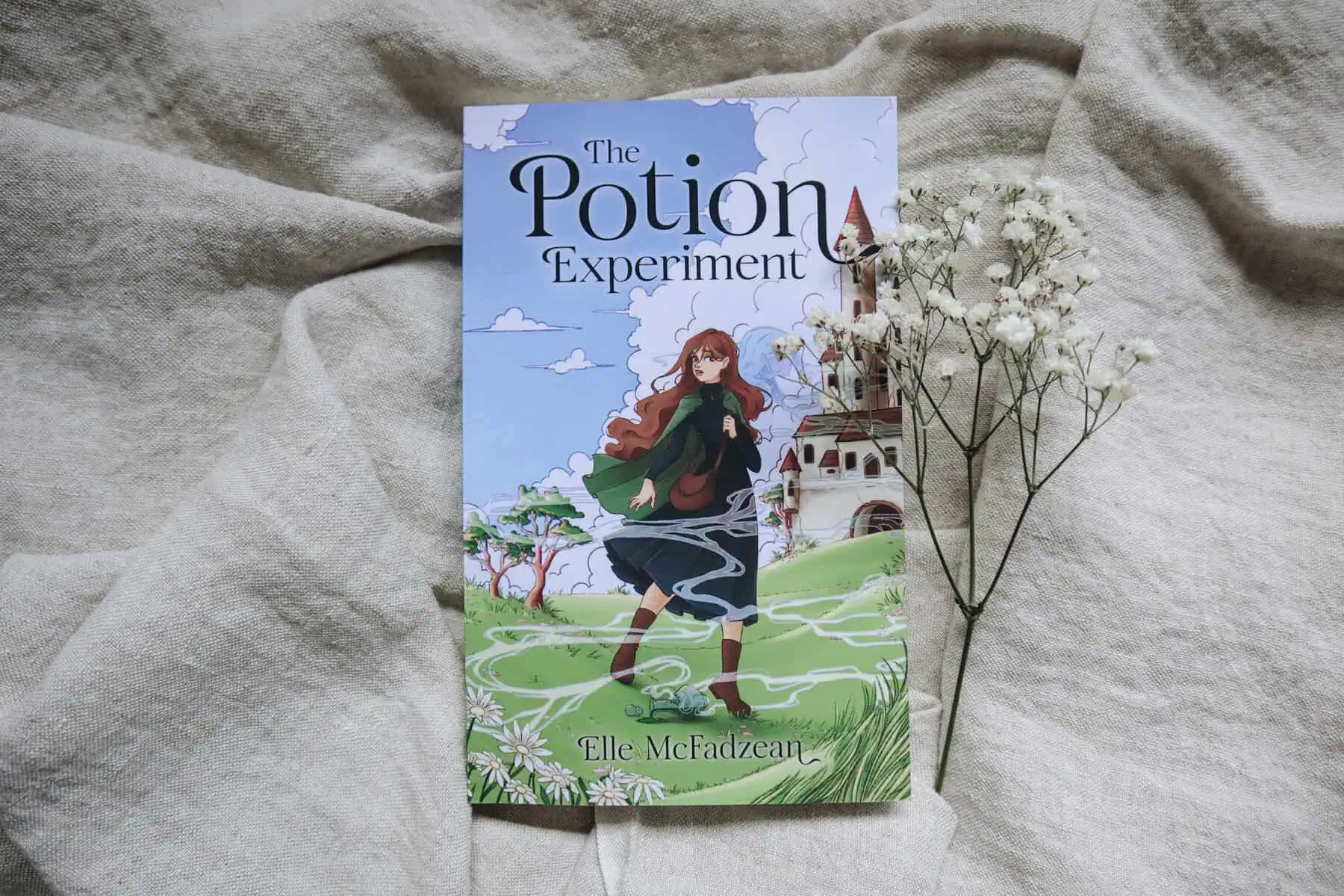
Recently, something quite exciting happened. I discovered that The Potion Experiment, my debut middle-grade novel, had received a BookLife review – the editorial feedback component of the BookLife Prize, which is part of Publishers Weekly. I’d submitted my manuscript some time ago, knowing a Critic’s Report was part of the process, but not knowing when it would arrive – or what to expect when it did.
When the email came through, I clicked the link with a mix of nerves and curiosity. What I found wasn’t just a score or a few lines – it was a thoughtful, considered review that prompted me to pause and reflect. Not just on the book itself, but on what it means to write for curious, growing minds.
BookLife gave the book an overall score of 8.5 out of 10, with high marks in character, prose, originality and plot. But numbers aside, what struck me most was the reviewer’s care in describing how the story worked – and where it seemed to resonate.
I want to share a few highlights I’ve taken away from the review – to document what I’m learning and to honour the process of putting a story out into the world.
Plot: let curiosity lead the way
One part of the review that stood out to me was this line:
“The book’s events are humorous and thought-provoking… full of adolescent thrills, age-appropriate worries, and the joy of scientific discoveries.”
That last part – “the joy of scientific discoveries” – felt particularly meaningful. When I began writing The Potion Experiment, I didn’t set out to teach science (I’m not a scientist), but I did want to celebrate the kind of curiosity that fuels both magic and STEM. In the story, Eva’s reckless potion-making accidentally triggers a body swap with Ange, who finds herself caught in a world she doesn’t understand. It’s chaotic and comedic, but underneath it all is a story about what happens when you’re brave enough to ask “what if?“
I think middle-grade readers are primed for that kind of adventure. They live at the intersection of experimentation and emotion, so I tried to craft a plot that didn’t shy away from either. Their lives are full of firsts, of quiet experiments, of trial and error. So if the plot managed to translate that sense of experimentation and discovery, I’m so glad.
Reading that the reviewer found the events “thought-provoking” and full of “age-appropriate worries” reassured me that it’s okay to keep those questions front and centre. Kids don’t need to be shielded from complexity – they’re already navigating it.
Worldbuilding: balancing familiar and strange
The BookLife review also highlighted the story’s dual-world structure:
“A storyline that is rich with spells, potions, and magic… the lighthearted adventure and skilled worldbuilding will entertain middle grade readers.”
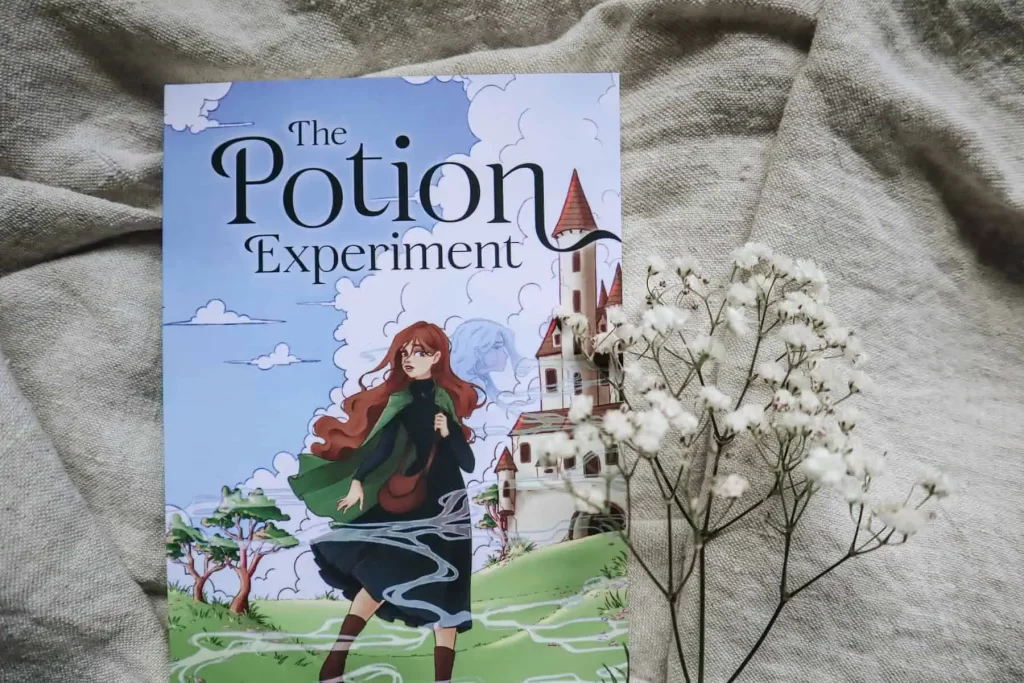
I’ve always been fascinated by worldbuilding – the expansive fantasy realms, epic narratives and journeys. But for The Potion Experiment, I approached worldbuilding on a more intimate scale. The story moves between our world (Ange’s science-driven society) and an alternative version of our world (Eva’s magic-reliant one). I wanted to explore what might happen if those two systems – science and magic – intersected. Not in an epic, world-ending way, but in a small, personal one.
Rather than building from scratch, I leaned into the small differences – how classrooms work, how teachers speak, how kids react to what’s “normal” in their own world versus the other. It reminded me that good worldbuilding doesn’t always need to be sweeping or epic. Sometimes it’s in the little contradictions. The everyday details that make a reader pause and say, “Wait… that’s not quite how it works here.”
Character: finding the heart of the story
Perhaps my favourite part of the BookLife review was its focus on the relationship between the two girls:
“The relationship that develops between Ange and Eva is fun to watch… each girl emerges with her own personality and individual preferences… the ending is polished and warm-hearted.”
Writing Ange and Eva was one of the most rewarding parts of this project. They’re opposites in many ways – one careful and sceptical, the other bold and impulsive – but both are navigating new worlds, with all the uncertainty and potential that brings.
My hope was to show character growth without erasing who they are. To show that each girl could be shaped by her experiences in the other’s world, but still stay true to her core self. I didn’t want them to change completely. I wanted them to grow into themselves. To understand each other. To become a little braver, a little kinder.
If their dynamic came through as layered and genuine, that’s exactly what I’d hoped. Character work is where I often spend the most time – rewriting a line of dialogue for the tenth time – so it was encouraging to know that part of the story connected.
It was also nice to see the ending described as “warm-hearted”. I worked hard to land the story in a place that felt earned but hopeful. A soft landing, with a little bit of “what if?” still lingering in the air.
Emerging author BookLife review
Getting reviewed at all, especially as an emerging author, feels like a quiet kind of magic. I don’t have a big platform or a long list of publications. I’m just someone who loves writing stories. So to have someone take the time to read the book thoughtfully, and to reflect on it in writing, is something I deeply appreciate.
It’s also a reminder: stories matter. Even the ones we write while wondering whether anyone else will understand what we were trying to do. Especially then.
The Full Review
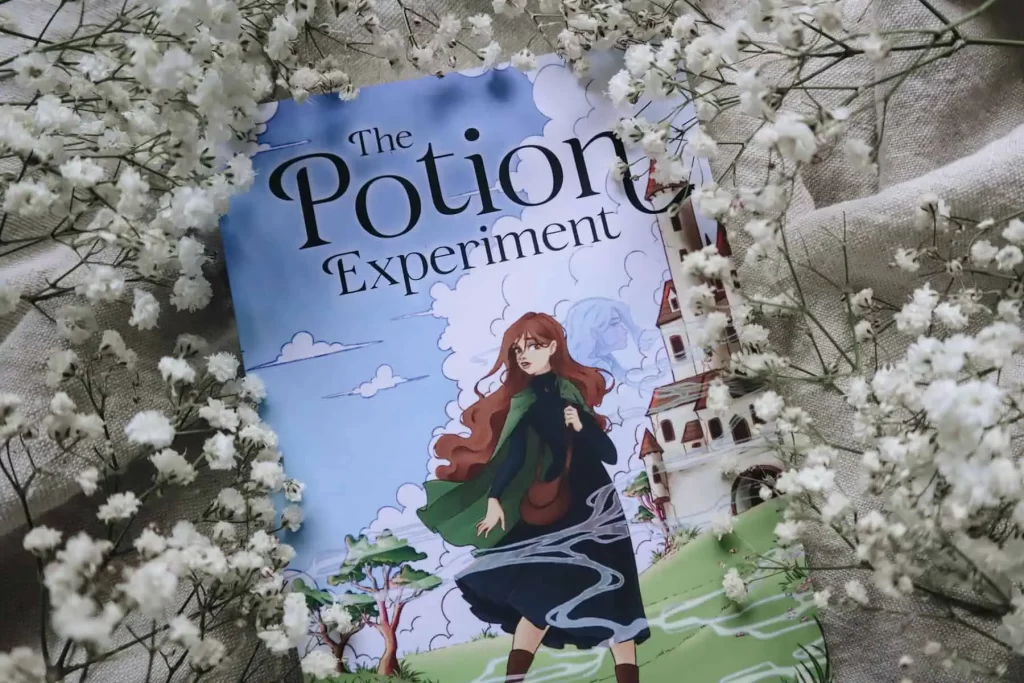
The full The Potion Experiment BookLife review is available below or on the BookLife Prize page under YA / Middle Grade Fiction.
Summary
- Plot/Idea: 8 out of 10
- Originality: 8 out of 10
- Prose: 9 out of 10
- Character/Execution: 9 out of 10
- Overall: 8.50 out of 10
Assessment
Plot/Idea: When 13-year-old Ange finds herself inexplicably stuck in Eva’s body, the two realize they have swapped bodies and chanced upon a parallel universe, thanks to Eva experimenting with potions. The book’s events are humorous and thought-provoking as the girls try to find a way to undo Eva’s mistake, with a plot that is full of adolescent thrills, age-appropriate worries, and the joy of scientific discoveries.
Prose: McFadzean writes with a light touch, crafting typical teen conflict and experiences while melding both Ange and Eva’s alternate worlds together in a way that feels natural and effortless.
Originality: The Potion Experiment sees two worlds collide in a storyline that is rich with spells, potions, and magic. The lighthearted adventure and skilled worldbuilding will entertain middle grade readers.
Character/Execution: The relationship that develops between Ange and Eva is fun to watch: the girls resemble siblings in many ways, and their interactions with each other mimic the usual concerns of early teens, as they navigate friendships, school, and self-discovery. Despite being trapped together, each girl emerges with her own personality and individual preferences, and, though their worlds are vastly different, they stumble onto similarities between the two that will entertain. The ending is polished and warm-hearted.